
Peg and I went to see Practical Magic 2 at the Spectrum on Thursday. She had a professional obligation (her review here!) but we both knew well the original film and have read some of the novels Alice Hoffman wrote about the Owens family, though not the most recent — though I’m pretty sure a couple of things are from the earlier prequels (the fate of the aunts, and the book hidden in the public library).
The original film is a sentimental fave of many witchy women: sisterly bonds, folk magic, everyone’s a little witchy, bad romance, community comes together to beat the big bad, and of course its version of the done-to-death ‘dancing in the kitchen’ trope, Midnight Margaritas, and the finale of the witch flight. Bullock and Kidman are great in it, Dianne Wiest and Stockard Channing absolute delights, Aidan Quinn and Goran Visnjic as the good and bad boys, and in small but memororable roles, Margo Martindale and Chloe Webb. It’s all handled with a skilful touch by Griffin Dunne (actors who become directors generally know how to get the most out of actors) and woven together with a memorable soundtrack by Alan Silvestri along with hits by Stevie Nicks and most poignantly, Joni Mitchell’s ‘A Case of You’. It’s comfort food with a little magic. The stickier parts of Hoffman’s novel get sanded off. Her writing is so enjoyable; I suppose I should read the lastest in the series as it may answer some questions.
The short version of my review: it’s disappointing.
The longer version: this feels like a film driven by the marketing department. We have to have fan favourites the Midnight Margaritas and the Witches Flight! We have to soft-focus (etc) our stars so they look like they’re not old enough to have college/grad school age children. We have to have big stars who don’t get enough to do (seriously, Maisie Williams and even Kidman should have demanded a bit more). There is lame humour (hee hee they have to carry their too-heavy bags up a bunch of stairs because it’s England! and they’re Americans who pack too much!) and a lot of superficial tropes that feel like checked boxes. The Latino boyfriend (we are diverse! sort of) who’s immediately put in danger — the curse of the Owen women is in the first film and immediately referenced in the second despite the suggestively positive ending of the first — and made to be an orphan, which initially seemed odd [there is a lot of exposition simply related to the audience in dia/monologue] but I realised it was so there wouldn’t be anyone visiting him in the hospital except the Owenses. The wedding scene was so carefully orchestrated to show a wide variety of racial and bodily diversity — all of course non-speaking roles. Window dressing we call that.
From here on, considerable spoilers:
Peg and I both laughed incredulously (we were the only ones in the theatre, so it was all right) when Joey King’s Kylie immediately takes off to England — assuming that unlike more than half of Americans she already had her passport — and the now-required ETA you can’t fly without. Practical details, I know. OMG what train line has those plush wide seats and tables?! Certainly not LNER (LOL). And that vintage bus to the middle of nowhere village (actually Leavesden which is part of Watford). But a great pub in some scenes.
Practical is a sticking point; one of the things that really stood out was what Peg dubbed the ‘Harry-Potterfication’ of magic. The whole point of the Owens magic is that it rises out of a practical use passed down between generations. Sometimes written generally not in Latin, but the language they spoke. It bugs me (apart from all the loathsomeness JKR has personally offered the world) because it mirrors the conflation of folk magic with learned necromancy at the end of the Middle Ages that helped lead to the witch hunts of the Early Modern period (also mostly religious schisms, but that’s a longer discussion). The subtle and homely magic of the original film (not always pretty! there is animal harm in one charm) gets replaced by digital effects. Yawn. And lots of sigils and Latin.
Why the Rauðskinna? Maybe Hoffman introduces it in the novel with some thoughtful context but it just seems completely out of the blue to have an Icelandic grimoire ‘essential’ to the magic of these women from a small village in England.* It really does feel like Potterville; an excuse to doll up the gorgeous Lee Pace with a lot of occult tats — no complaints there! But I guess we were meant to see him as potentially the bad guy based just on that appearance? I mean, who doesn’t have friends that look like that (the tats I mean; I don’t think I have any friends that look anything like Pace)? Or maybe the filmmakers don’t? Of course you know they can’t quite trust him so he gets conveniently knocked out at the point where he might help.
And the obvious it’s-a-set of the final showdown is further irksome; the whole scene ‘recreating’ the original execution because of course in England they generally hanged witches oh but now we’re going to burn the witch! On a pole. In a stone courtyard. With a pentagram design baked into it, because of course that’s how they executed witches in the Olde Dayes.
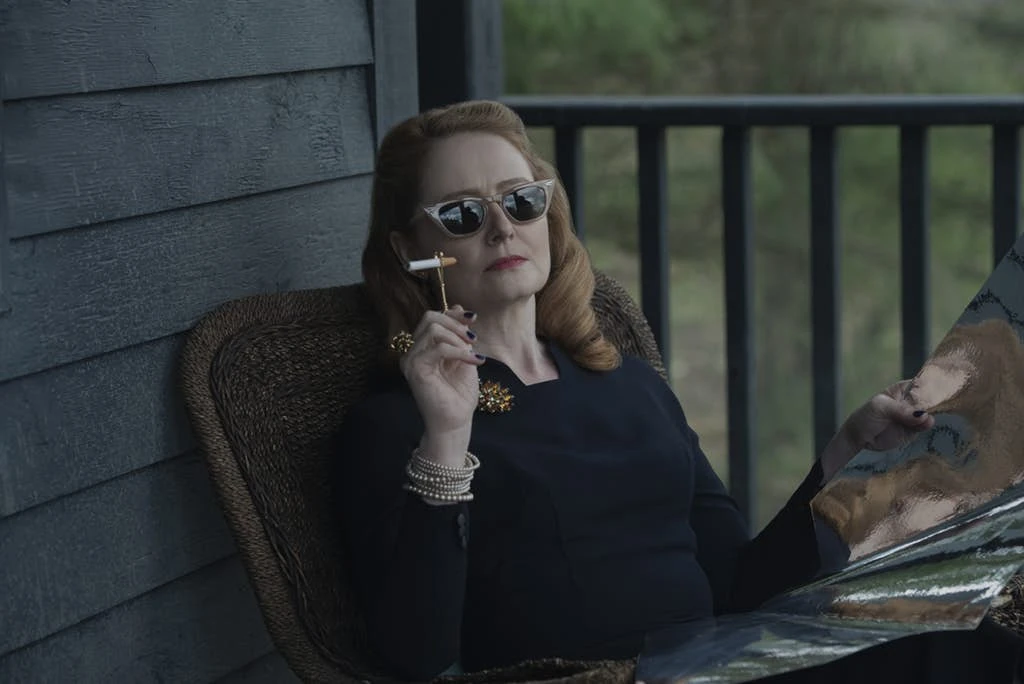
The original film wasn’t a deep and meaningful cinematic wonder, but it was fun, both sweet and suspenseful, and it had characters not just plot points and sets. The arc of the story led toward a community coming together despite their being witches because the needs we all share in the face of implacable evil need collective action. Or so I like to think. I suppose the one positive thing both films share is don’t take away girls’ magic just because you’re scared; they need it more than ever.
As a sweet chaser to this somewhat sour review, here’s my first memory of Lee Pace in the absolutely enjoyable Miss Pettigrew Lives for a Day with a fabulous cast including Amy Adams, Frances McDormand, Ciaran Hinds, and more — and from a delightful book which you should definitely read:
*Yes, I know the vikings (Danish, Norwegian, Icelandic) took over various parts of the British Isles.